
 Editor
By Poorvaa Malhotra
INTRODUCTION
It is widely believed that the history of dome architecture in India began by Muslim and Persian builders. Though the perfect structure of domes is definitely accredited to the later Islamic period. However, many historians and experts debate whether local Hindu builders were already attempting to create dome-like shapes on their own centuries before. Many ancient architectural treatises hint that Hindu builders were already experimenting with and creating vaulted structures. The dome like roofs of Hindu and Buddhist temples reveals the earlier instances of the rounded ceilings, some of them which are discussed in the article.
BACKGROUND HISTORY
The beginning of Islamic rule in India can be traced back to the 7th century CE when early Arab traders and merchants established contacts. It was followed by Turkic-Afghan constant invasions and conquests, notably those launched by Mahmud of Ghazni (11th Century), who carried out about seventeen raids into North India, plundering the wealth of temples (such as Somnath) and cities. It was in the twelfth century CE when the Ghurid army led by Mu’izz ad-Din Muhammad ibn Sam, popularly known as Muhammad Ghori (c. 1144-1206 CE), defeated Prithviraj Chauhan and captured Delhi in the Second Battle of Tarrain (1192 CE) that marked the beginning of Islamic rule in North India. Ghori left his trusted slave-general Qutb-ud-din Aibak (1206-1210 CE) who then sets the foundation for the Delhi Sultanate by establishing the Mamluk/ Slave Dynasty (1206–1290 CE). He legitimized his rule by building the Quwwat-Ul-Islam Mosque (Might of Islam), the oldest surviving mosque in the Qutub complex, Mehrauli, Delhi, as a symbol of the declaration of Islamic power.
The Persian inscription found on the inner eastern gateway of the Quwwat ul Islam Mosque ( Jami’ Masjid) states that the mosque was built by Qutb-ud-daula Waddin, the Amir ul Umara Aibeg (i.e., Qutb-ud-din Aibak), a slave (Mamluk) of the Sultan Muhammad Ibn Sam, following the conquest of the fort (Lalkot/Qila-i-Rai Pithora) in 587 AH (1191-1192 CE). It further mentions that materials of 27 idol temples were used for the mosque’s construction —a practice that not only reflected political assertion but also gave rise to a distinct hybrid style, which later came to be known as Indo-Islamic architecture.
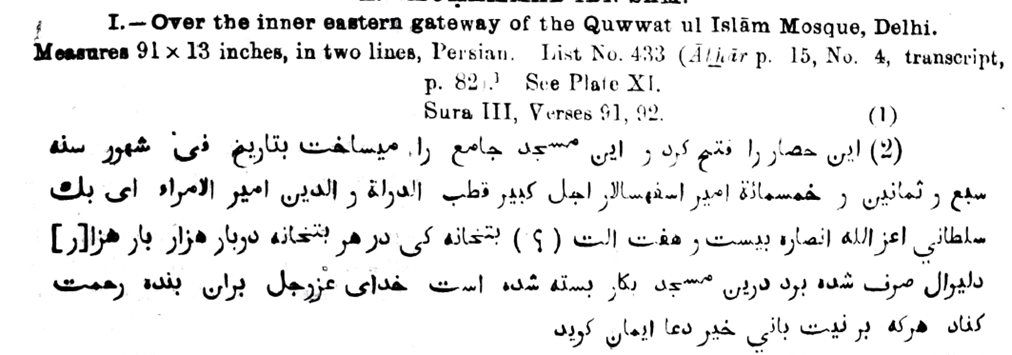
Figure 1 Inscription of Quwwat ul Islam Mosque, Source Indo Moslemica
DOMES: MEANING AND PURPOSE.
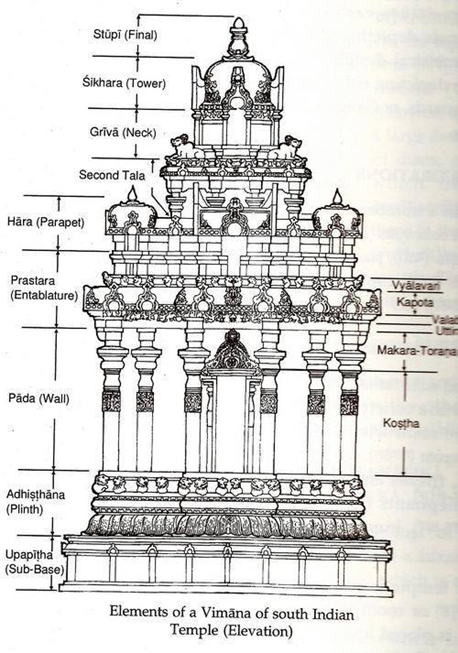
The Dome is an architectural element characterized by a hemispherical, curved, or bulbous roof that crowns buildings. The term “dome” derives from the Latin word domus, meaning “house” or “dwelling.” The word “Gumbad” (also spelled Gumbaz or Gumbat) is used as an equivalent term for Dome in Persian and Urdu. Similar to this, the ‘cupola’ is often used to denote a smaller dome or vaulted roof, typically placed atop a superstructure. In Hindu temple architecture, a curvilinear or tapering spire that crowns the garbhagriha (sanctum sanctorum) is called a Śikhara and the Vimāna used inthe Nagara (North Indian) style and the Dravida (South Indian) style of temple architecture respectively.
The purpose of building the hollow structures, like dome, was to regulate the temperature, keeping the interior of the building cool in summer and warm in winter. It also enhances the divine aura by allowing the sound to echo beautifully inside the sanctuary, helping devotees to immerse spiritually.
BUILDING TECHNIQUES
Ancient India has produced many architectural treatises, such as the Śilpa Śāstras with comprehensive knowledge on every aspect of the construction of buildings, from the choice of materials to directions, proportions, and ornamentation of essential structural components.
In pre-Mughal times, the dome-shaped structures generally had a square base with a lotus motif and bulbous finial at the top, as also seen in many Hindu temples. They were based on the trabeate (post-and-lintel system) in which domes were constructed by laying bricks in mortar in horizontal layers creating a tapering, conical, or curvilinear spire that gave stability to the structure and suited the Hindu architectural tradition, which did not employ arches or true domes.
The Islamic rulers introduced the arcuate principle to India, bringing with it the concept of the true arch and the true dome. It involves techniques like using iron dowels and cramps to strengthen the structure. Timber and bamboo were being employed to support the dome until the mortar set. Although the use of iron cramps was already being followed in pre-Islamic India mainly for the hoop reinforcement at the dome’s base, the Islamic rulers somehow refined these techniques, creating a grand structure that reflected the technical and cultural exchange between two architectural styles. (Ganvir, 2019)
TRACING HINDU ORIGINS OF DOME ARCHITECTURE
The Indo-Islamic architecture in India is a unique fusion of culture, faith and craftsmanship. One of its captivating and symbolic architectural elements is the domes—the crown of Mughal architecture. It enhances the grandeur of Mughal buildings including mosques, tombs, and palaces. Yet, long before the Mughals introduced their iconic bulbous domes, India had already mastered the art of the fundamental structure of domical shapes (both full hemispherical forms and cupola-like elements). They seem to be derived from pre-Islamic architectural practice including Hindu temples, Buddhist stupas, Jain shrines, and even early rock-cut caves. Moreover, references from ancient architectural treatises such as the Mānasāra and the Bṛhat Saṃhitā, along with archaeological evidence from stupas and early temple remains, reveals India’s timeless engineering skills.
Many scholars believe that domical forms predate Islamic influence by many centuries. Percy Brown in his Indian Architecture (Islamic Period), 1968 discussed about the use of Hindu temple materials to build the early Islamic mosques and tombs was ‘mainly a patch work of older materials, beautiful in detail, as its arcaded aisles were composed of pillars carved in the most perfect Hindu style, but as a whole a confused and somewhat incongruous improvisation’. The use of the corbelled arch system in Islamic buildings in India shows the distant architectural ancestry rooted in ancient Hindu and Buddhist traditions, tracing its lineage from the curved cave of village huts, through the rock-cut facades of the Barabar hills (2nd century B.C.) and the hemispherical stupa. (Brown, 1968). Similarly, in Delhi its story and buildings (1921) by H. Sharp, references how Hindu architectural elements like ‘kalasha or ornate lotus-cresting’, were incorporated on the dome, thereby marking a development of the Indo-Islamic style
The earliest reference to the domes can be seen in Buddhist stupas as a central structure called Anda, which is the Hemispherical Dome and is constructed of baked bricks. Early rock-cut chaitya halls, such as those at Bhaja and Karli, developed from the stupa’s rounded form into curved, barrel-shaped ceilings showing the curved wooden and bas relief huts that were common in ancient India long before stone architecture became dominant. (Brown, 1959). In Hindu temple architecture, we find cupola like structures in stupika, kalasa mastaka, the crowning element that completes the vertical axis of the temple tower (śikhara or vimāna). This element typically culminates in a disc-like amalaka and a pot-shaped kalasha—both representing fertility, cosmic energy, and divinity. In addition to this, the Sikh architectural tradition depicts the dome in the Gurdwaras such as Harmandir Sahib (Golden Temple) in Amritsar, Gurdwara Sheesh Mahal in Kiratpur etc., featuring lustrous domes with floral bases like inverted lotus motifs.
There are many primary textual sources belonging to ancient India which give details for these domes or stūpi. Sanskrit treatises on architecture—the Vāstu Śāstras, Śilpa Śāstras, Manasara, Agni-purana, Vişnu-dharmottara-purāņa, Kasyapasilpa, Mayamata —are foundational to understanding the Hindu architecture, sculpture, iconography, and painting.
Varāhamihira’s Brihat Samhita (c. 6th Century CE): This Sanskrit work by Varāhamihira covers themes like astrology, architecture, and other sciences. It gives the chief categories of temples in India in its chapter on vāstu (architecture), viz Nagara (North Indian), Dravida (South Indian), and Vesara (a hybrid). The Chapter 56 (Prāsāda-lakṣaṇa) then mentions the instructions for constructing the temples and lists twenty distinct types of temples among which Mandara, Kailāsa, Nandana having multiple śikhara (towers) and stūpis (domes or cupolas) such as The Sarvatobhadra has four doors and many domes (bahuśikhara); the Nandana has six storeys and sixteen cupolas. Thisindicates that domes were integral to Hindu temple architecture long before the introduction of Islamic arches and true vaulting.
The Mānasāra Śilpa Śāstra (c. 5th-7th Century CE): This text is one of most comprehensive treatises on Indian architecture with 70 adhyayas (chapters) and 10,000 shlokas (verses). Discovered by P.K. Acharya, Manasara (essence of measurement) talks about the construction plans of temple. In its chapter 18 (Vimana-laksana) it describes stūpi/stūpikā as “dome-like” or spherical superstructure placed above the vimāna and is circular or quadrangular in shape (v. 90-91). It suggests that “The edifice should be furnished with domes (stūpikās)—three, two, or one in number”(v. 92)

For reference
Ajitāgama (XIV.64cd–65ab): The Ajitāgama is a Āgama text (Śaiva tradition) that locates the gala (the neck) is placed above the prastara (the temple’s entablature) and resting on a vedikā (base).
galaṃ syāt prastaropari |
tanmūle vedikāṃ kuryāt tasya lakṣaṇam ucyate ||
This section forms the foundation for the dome-like or finial element (stūpi, kumbha, kalasha). The gala acts as a drum between the tower and the upper dome showing a precursor to the dome-drum system.
Kāśyapa Śilpaśāstra (XIX.6) mentions the different geometric bases for the upper crowning element (stūpi/śikhara) which is square (vedāśraṃ) in Nāgara temples, octagonal (vasvaśraṃ) in Drāviḍa, and circular (vṛttaṃ) in Vesara. The circular and octangle base might later became a part of Indo-Islamic and Indo-Saracenic domes.
vedāśraṃ nāgare kaṇṭhaṃ vasvaśraṃ draviḍe galam |
vṛttaṃ tu vesare harmye galamānākulaṃ nayet ||
Kāmikāgama (I.58.1cd) suggests the idea of padma (lotus base) that supports a bulbous, dome-like sthūpi a dominant feature seen in many domes in later centuries. The verse padmoccaṃ vārdhabhāgo vā tadūrdhve sthūpikāyatiḥ tells that the height of the sthūpikā should be equal to or half the height of the lotus (padma) below it.
Vṛkṣārṇava (Maru-Gurjara, c. 15th century CE): A late medieval Vāstu text that in which there is a chapter on Rehamāṇa-Prāsāda (the temple of Rehamāņa,i.e,, Allah ) that shows how to build mosques according to Hindu Vāstu principles. The text treats mosque construction as part of the same architectural system as Hindu temples and other buildings.
ARCHAEOLOGICAL AND MONUMENTAL EVIDENCE
Early Domed Huts and the Origin of Rock-Cut architecture in India
According to Percy Brown in his Indian Architecture, the earliest buildings were made from perishable material bamboo, timber and reeds. These huts had round, dome-shaped roofs that helped to keep out rain and protect what was stored inside. Such forms are still seen in Indian villages today in small round huts called chhappar or bitaura, used to store cow-dung cakes or grains.
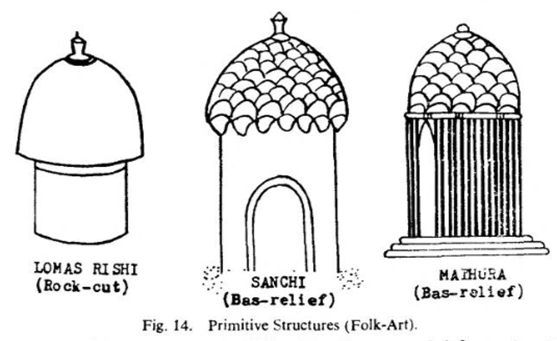
Figure 2 Bas Relief Domed huts, Percy Brown
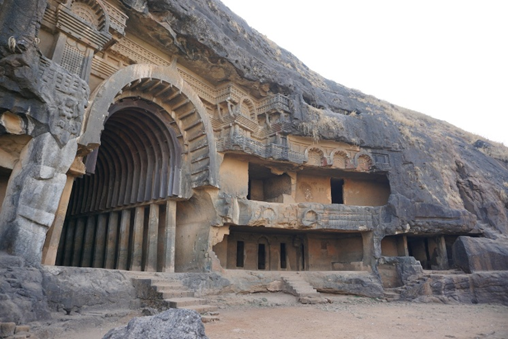
Figure 3 Bhaja Caves,Source: http://dharma-records.buddhasasana.net/photos/bhaja-caves-lonavala-india
Buddhist Stupas
The stupas are the funerary mound made of bricks which is hemispherical in shape called anda. In the Kūṭāgāra Sutta (Saṃyutta Nikāya V.75), the Buddha uses the image of a roofed pavilion (kūṭāgāra) to describe spiritual practice:
“Just as all the rafters of a roof incline, slope, and converge at the peak,
so too the seven factors of enlightenment incline and converge upon Nibbāna.”
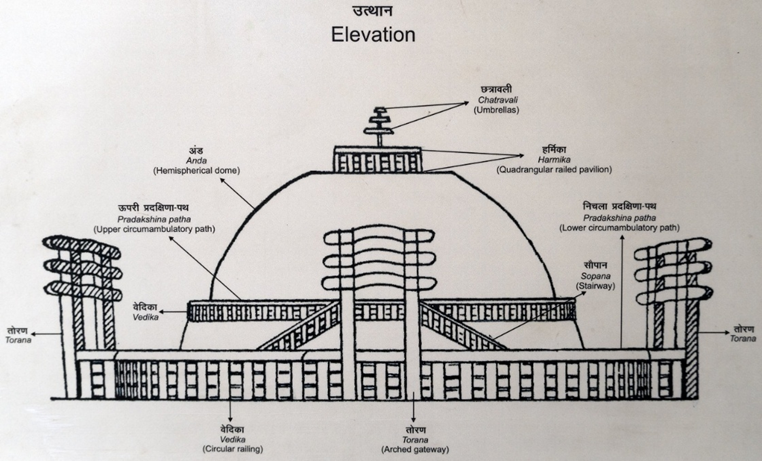
Figure 4Elevation of the Stupa (https://www.wisdomlib.org/gallery/new-delhi-maurya-arts/8816)
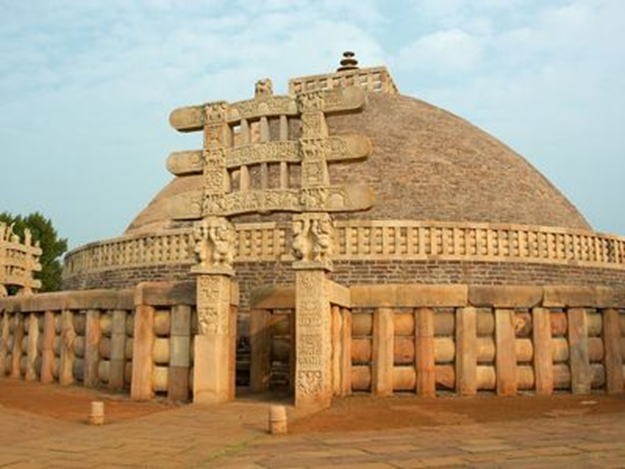
Figure 5 The Great Stupa at Sanchi (Source: https://www.britannica.com/topic/Buddhism)
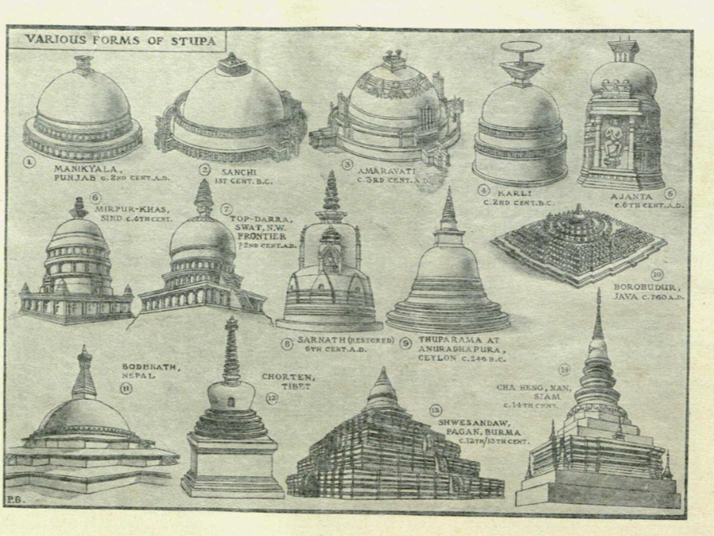
Figure 6 Various forms of Stupas, Percy Brown
Circular temple at Bairat, Jaipur, C. 2nd century BCE
This circular shaped temple is Chaityagriha dedicated to Buddhism and located on the hills of Bijak-ki-Pahari (lit. ’Hill of the Inscription’) in Rajasthan. It is named so as we have found two important Minor Rock Edicts of Asoka. The city Bairat holds great significance and it was known as Viratpura, the capital of King Virat. Today, only the stone base and foundation walls of the structure survive. However, based on these remains that were excavated by Rai Bahadaur Daya Ram Sahani, scholars and art historians including Percy Brown have reconstructed it as a domed structure, suggesting that it originally had a dome-shaped roof supported by wooden pillars.
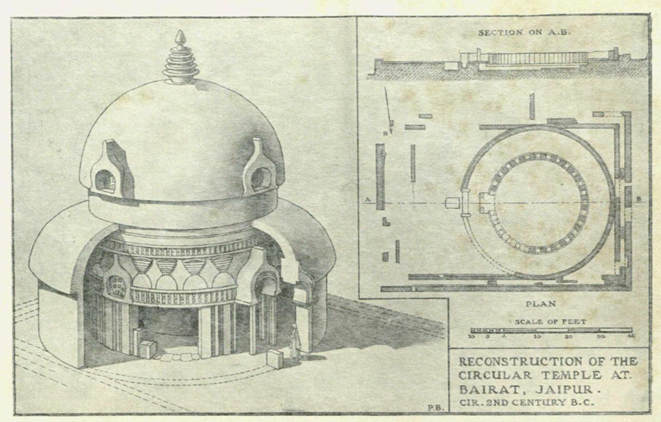
Figure 7 Bairat Temple, Percy Brown
The Bhitargaon temple (c. 5th Century CE, Gupta Period)
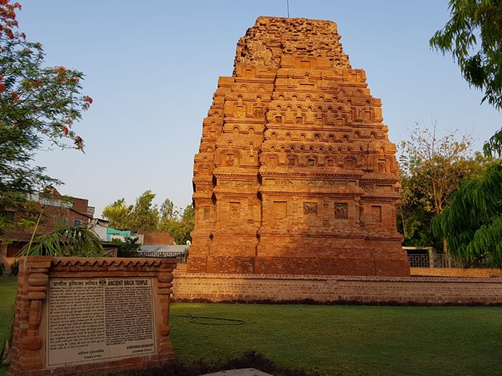
| Figure 8 Bhitargaon Temple (Source: https://kanpurnagar.nic.in/gallery/bhitargaon-bricks-temple/) |
Located in Uttar Pradesh, Bhitargaon temple is the oldest surviving Nagar style temple from Gupta period. It was discovered by Alexander Cunnigham in 1877 who mentioned that the locals called this temple as Deval meaning shrine. Later, it was surveyed by Archaeologists such as J.P Vogel(1907) A.H Longhurst (1909). It is remarkable to notice that the Shikhara (tower) of the temple is built with semi-circular vaults and pointed domes instead of simple flat roofs. It was observed that the porch (ardhamandapa) and the sanctum (garbhagriha) had vaulted arched ceilings showing the use of true arches. Another feature of this temple is that the Shikhara is hollow inside and is build using the “double-dome system” . The hollow space reduced the weight of the upper structure while giving the temple greater height and a grander appearance. (Zaheer, 1981) The use of techniques like corbelling, true arches and double domes shows an early form of arcuate construction in temple architecture long before Islamic influence reached India.
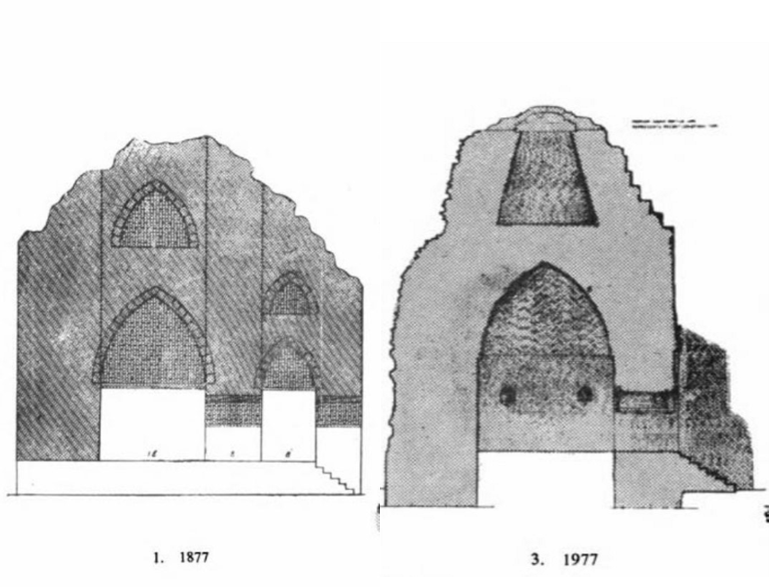
| Figure 9Double dome technique used in Bhitargaon Temple. (Zaheer 1981) |
CONCLUSION
Contrary to the popular notion that dome architecture was introduced by Islamic rulers, it is noted that domical forms were already being practiced since ancient times by the Indians. It was a part of vocabulary in many architectural treatises depicting its earliest representation in domed huts and stupas to the crown of temple architecture. Although the fundamental structure of dome true domes and arches were a part of arcuate architectural tradition, the central idea of the dome remains the same in every culture. It symbolised the cosmic mound that embodies Mount Meru connecting earth to heaven.
In conclusion, domes as shapes and symbols have deep roots in India’s pre-Islamic architectural and textual traditions. The technological innovations of Persian and Timurid engineering assimilated with Indigenous craftsmanshipto create a distinctive style of Indo Islamic architecture.
BIBLIOGRAPHY
Acharya, P. K. (1933). Manasara (English Translation).
Brown, P. (1959). Indian architecture: (Buddhist and Hindu periods). D.B. Taraporevala, Bombay.
Brown, P. (1968). Indian Architecture (Islaamic Period). Taraporevala’s Treasure House of Books.
Ganvir, A. L. (2019, Aril-May). A Comprehensive Study of Evolution of Domes in Indo- Islamic Architecture. Journal of Civil Engineering and Environmental Technology, 6(2), 88-90.
Kashyapa Shilpashastra. (n.d.). Retrieved from Wisdom Library: https://www.wisdomlib.org/hinduism/essay/kashyapa-shilpa-shastra-study
Kumar, S. D. (2015). Building science of ancient Indian temples. International Journal of Engineering Sciences Paradigms and Research.
Zaheer, M. (1981). The Temple of Bhitargaon (1 ed.). Delhi: Agam Kala Prakashan.
This looks really nic and detailed. Thanks for sharing