
 Editor
Article By Poorvaa Malhotra
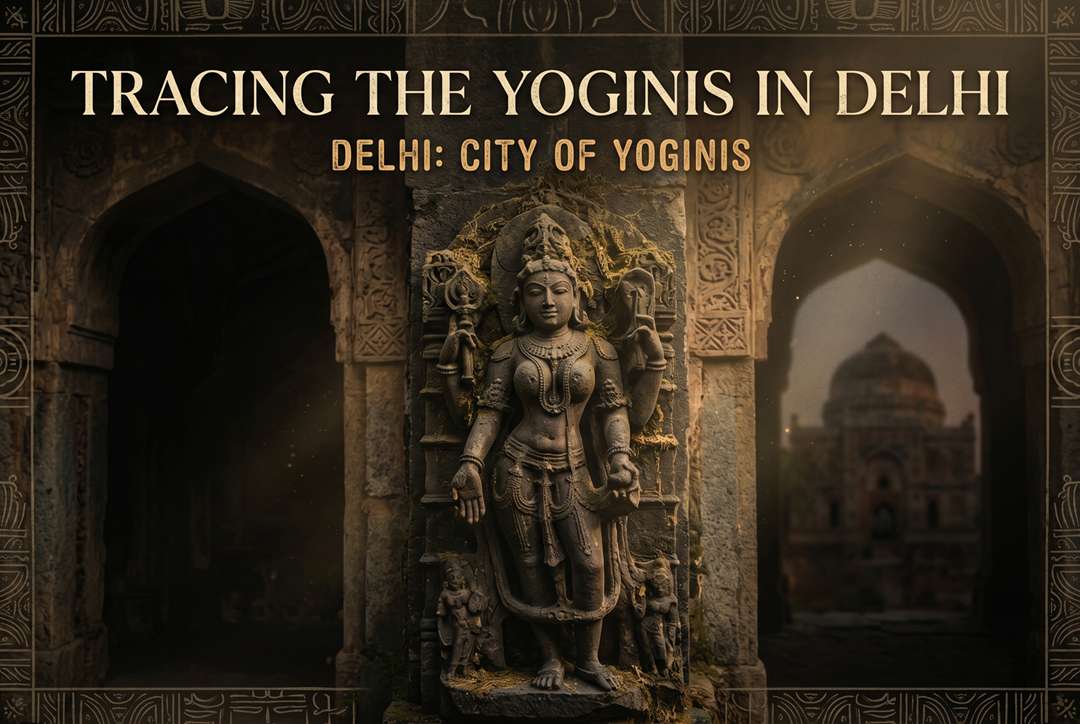
Delhi, the capital of India, has witnessed countless stories, cultures, and commotions. The name of the city, as Dilli or Dihli and later Delhi, was popularised under the Muhammadan rule. However, long before the Mughals, literary sources and epigraphic evidence record there was a series of names that reflected successive phases of Delhi’s past.
Building on this, the earliest references to the region can be traced in the Mahabharata as Indraprastha, the capital of the Pandavas. By the early medieval period, the city was known as Dhillika (or Dhillipura) during the reign of Anangpal Tomar II, a ruler of the Tomara dynasty. The Tomaras, a Rajput clan, ruled parts of present-day Delhi and Haryana, establishing the region as a political center.
Continuing through history, epigraphic evidence belonging to the Sultanate period further confirms the use of this name in later periods. A Sanskrit inscription from Palam (Palamba), located to southwest of Delhi, records the excavation of a Baoli by a noble named Udhdhara Thakkura during the reign of Sultan Ghiyas-ud-din Balban in Vikrama Samvat 1333 (1276 CE). The inscription mentions the ancient names of Delhi, including Dhilli and Dhillika in the Haryanvi-Bagri dialect. Later, European travellers such as Bernier referred to it as Dehli and Tavernier as Dehly. The latter part of the inscription gives a poetic name to Delhi as Yoginipura, the “city of yoginis” or the “fairy city,” which is prosperous and jewel-like.

Figure 1: Mention of Yoginipura in Palam Baoli Inscription Source: Rajendralal Mitra
This highlights the religious practice of the yogini cult, which was prevalent in the city before the Islamic rule. The article explores the spiritual aspects of the city, which was once blessed with the presence of Yoginis and Shakti cult.
Who Are Yoginis?
Preceding the Mamluk Dynasty, which was established during the Islamic rule, Delhi was under the control of the Tomars and later by the Chauhans. The Tomars built the fortified city of Lal Kot in the eleventh century, which was later expanded by the Chauhan rulers into the Qila Rai Pithora. The region was a sacred landscape with cultic worship of Shaiva and Sakta. Within the Sakta tradition, the cult of the Yoginīs held particular significance. Their cult flourished across various regions of early medieval India, often connected with Tantric ritual, sacred geography, and royal patronage.
Rooted in early Śākta and Kaula practices, Yoginīs are known as goddesses and semi-divine beings. The word ‘yogini’ holds different meanings and understandings. The primary meaning of ‘Yogini’ in Sanskrit is given as a female devotee, generally the counterpart of Yogi; a fairy or a goddess. While the Vedic and Puranic texts identify Yogini as forms of Durga or attendants of goddesses. In Buddhism, the yoginis are known as ḍākinī, which means ‘sky-goers’ and is generally associated with liberation.
The origins of the Yoginī cult can be traced back to early Indian literature, as mentioned in the Mahābhārata (around the 4th century BCE to 4th century CE). The Śalya Parva records 200 Mothers (Mātṛgaṇas) accompanying Skanda (Kumāra). These female characters are described as having alluring features such as sharp teeth, long nails, protruding lips, and round bellies. They are said to originate from major gods like Yama, Rudra, Indra, Agni, Varuṇa, Vāyu, Kubera, Soma, Brahmā, and Skanda himself. According to Vidiya Dehejia in her book Yogini Cult and Tradition (1986), these Mātṛgaṇas likely indicate their role as precursors to later goddess groups such as the Yoginīs. The concept of Aṣṭa Mātr̥kās (Eight Mother Goddesses), as mentioned in Agni Purāṇa, also supports this. It explains that each Mātr̥kā is a group of eight Yoginīs, which equals sixty-four in total.
There are references to Yoginis in major Indian Literary texts, including the Vedas and Puranas including Agni Purāņa, Skanda Purāņa, and the Kālikā Purāņa, that offer details about significance, concept, siddhis, cultic worship, and nāmāvalīs. The Skanda Purāṇa lists Yoginī names such as Durgā, Gaurī, Kātyāyanī, Cāmuṇḍā, Mahāmāyā, and Bhrāmarī.
Tantric texts such as the Jayadratha Yamala, Brahma Yamala, and Kaulajñānanirṇaya has references for Yoginīs as early as the 8th century CE. The Tantric traditions often term Yogini as a powerful female being with supernatural capacities (siddhis). These are referred to as the doctrine of the aṣṭa-mahāsiddhis (eight great supernatural powers), which is mentioned in Patañjali’s Yogasūtras and later has commentaries by Vyāsa and King Bhoja.
The eight siddhis are:
- Aṇimā – the power of becoming minute as an atom
- Mahimā – the power of becoming a giant
- Laghimā – lightness in weight that can travel in the air faster
- Garimā –heaviness in weight which no one can move
- Prākāmya – ability to understand and control the mind
- Īśitva – control is control over the mind and body of others and self
- Vaśitva – control over natural elements
- Kāmāvasāyitā – fulfillment of all desires

Figure 2 Yogini Cakra Source: suryanamaskara.altervista.org
Yoginis occupy a central role in Kaula Tantra, particularly within the practice of Cakra-pūjā. TheYoginī Cakra, also known as the Kaula Cakra or Bhairavī Cakra in Kaula practice, is an important element. The worship of the Yoginī cult involved offerings of wine, flesh, and blood, reflecting their fierce Śākta nature. The Kaula path mentions the use of the pañca-makāras:
- Matsya (fish)
- Māṁsa (meat)
- Mudrā (parched grain)
- Madya (liquor)
- Maithuna (sexual intercourse)
Another significant aspect of yogini is numerical symbolism, like the 64 Yoginis, known as the Chausath Yoginis. These are related to manifestations of the Goddess Devi, such as Durga, and their worship began in the 9th to the 12th century CE, particularly within the temples. In essence, the Yoginis are the energies having divine powers depicted in the form of female guardians.The historical literature Kalhaṇa’s Rājataraṅgiṇī gives accounts of Yoginis who turn men into animals using their magical powers.
Furthermore, Yoginis are captured in paintings and sculptural forms, particularly in the early medieval period. The most striking feature of Yoginī sculpture is its theriomorphic iconography. The body of the Yoginī remains that of a human, and the head is depicted in animal forms, including Ajananā (goat-faced), Vṛṣānana (buffalo-faced), Śaśānana (hare-faced), and Gomukhī (cow-faced). The Kāśī Khaṇḍa of the Skanda Purāṇa mentions such sixty-four animal-faced Yoginīs, which are also carved in a number of temples across central and eastern India. These depict the supernatural forms of Yoginis as described in Tantric literature and folklore. Despite their frightful expressions, Yoginis are also shown seated in lalitāsana or standing calmly. Weapons, skull-cups, clubs, tridents, and skull garlands serve as markers of fierceness.
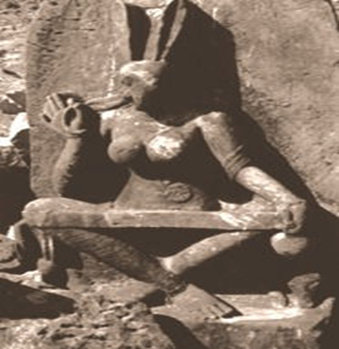
| Figure 3: Shashanana Source: Anamika Roy |
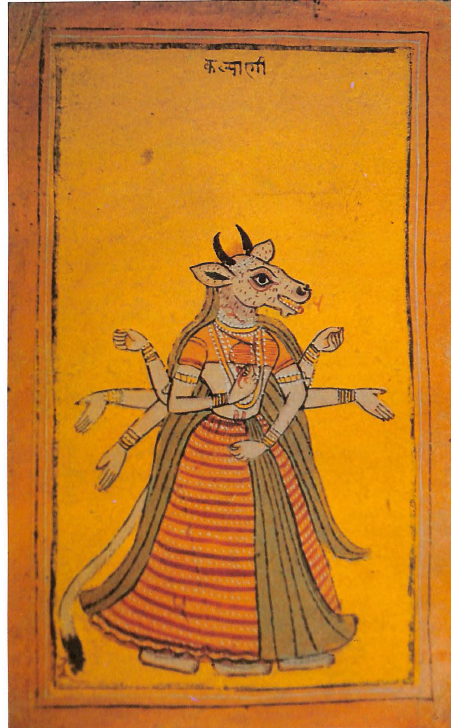
Figure 4: Yogini Kalyani, Rajasthan Pianting, 19th century Source: Dehejia 1986
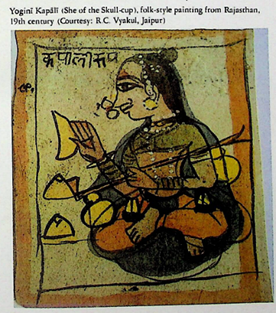
| Figure 5: Yogini Kapali, Rajasthan Pianting, 19th century Source: Dehejia 1986 |
In contrast to temple sculpture, Yoginīs are beautifully painted on the canvas of Mughal and Rajput miniature paintings. These are shown in various forms doing different activities, including forest scenes where she is seated under a tree, and a lion is bowing to her in respect. This reflects their supernatural nature, or the meditative postures show the traditions of female Tantric practitioners during that era. Rajasthani cloth paintings of the late nineteenth century show a blend of these traditions.
Beyond their presence in literature and art, the worship of Yoginīs in Delhi is reflected in surviving religious centre. The Yogmaya Temple, located near the ancient complex of Qila Rai Pithora in Mehrauli, stands as a significant living example reflecting the continuity of Shakta worship in the region.
The Yogmaya Temple
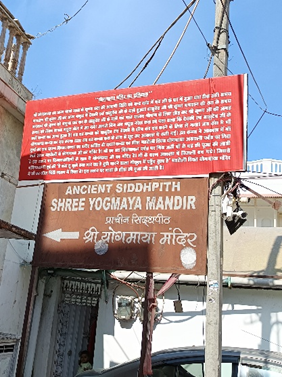
Figure 6: Yogmaya temple, Mehrauli; Image Courtesy: Poorvaa Malhotra (Feb 13, 2026)
The Yogmaya (or Jogmaya ) Temple is one of the significant 51 Sakta Peeths situated in Mehrauli, Delhi, just behind the Qutub Minar complex, and represents powerful expressions of Sakta worship. The site is identified in local tradition with ancient Yoginipura and is regarded as one of Delhi’s surviving pre-Islamic temples, including historic landmarks such as Anang Tal, Bhool Bhulaiya, Bhairav Temple, and others.
The Story of Yogmaya
In the Hindu philosophy of Advaita Vedānta, the Brahmana has created Yogmaya, an illusion to veil the reality of this world. Maya causes individuals to experience duality, whereas Brahman has non-dual existence. In Vaishnavism, there are two types of Maya: i) Pure Maya/ Mahamaya (Malignant Illusion) and ii) Yogmaya (Divine Illusion) (Kumar, 2006)
नाहं प्रकाश: सर्वस्य योगमायासमावृत: |
मूढोऽयं नाभिजानाति लोको मामजमव्ययम् || 25||
The above verse from the Bhagavad Gita (7.25) states that the true divine nature of Krishna is veiled by his supreme spiritual power, Yogmaya, from others. This veil prevents recognizing Him as the eternal, unborn reality from those who are attached to the worldly illusion. According to the Bhagavata Purana, the goddess Yogmaya is identified as the sister of Lord Krishna. She was born to Krishna’s foster parents, Yashoda and Nanda, in Gokul. In Chapter 4, Canto 10 of Srimad Bhagavatam, it is mentioned that she saved her brother, Krishna, from Kamsa. To express his gratitude, Krishna built the temple in memory of his sister Yogmaya. Names such as Vindhyavasini, Mahamaya, Mahalakshmi, etc., are often associated with the deity.
Alternative texts like the Mahabharat mention the Yogmaya Temple as a sacred place where Krishna and Arjuna used to pray and seek help from the Goddess against Jayadrath, who killed his son Abhimanyu. Other legends suggest that it was built by Yudhishthira after winning the battle.
Royal Patronage
The temple of Goddess Yogmaya has long been associated with royal patronage of Tomars, Chauhans, and later by the Mughals. The goddess Yogmaya was revered as the Kuldevi (family deity) of the Chauhan rulers. The temple has survived the invasions of Islamic forces, including attacks by Mahmud of Ghazni, and retained its religious significance.
According to some sources, Hindu ruler Vikramaditya Hemu reportedly restored the shrine in the 16th century. Later, in 1827, the present structure was rebuilt and renovated by Seth Sidhu Mal, a noble associated with the court of Akbar Shah II. Currently, the temple is under the management of Temple Trust to ensure its continuity as a place of worship for devotees.
In the book Delhi: City of Yoginis by Suphal Kumar, it is mentioned in his conversations with the temple’s caretaker Dayanand, who narrates that the shrine was respected by the Mughal rulers, including Emperor Aurangzeb (1658-1707). Local accounts also suggest that the temple was once the meeting point during the planning of the Revolt of 1857, where leaders like Nana Sahib, Azimullah Khan, Rani Laxmibai, and Veer Kunwar Singh met (Kumar, 2006). This highlights that the temple was not only religiously significant, but it was also a relevant space for political activities.
Architectural Features
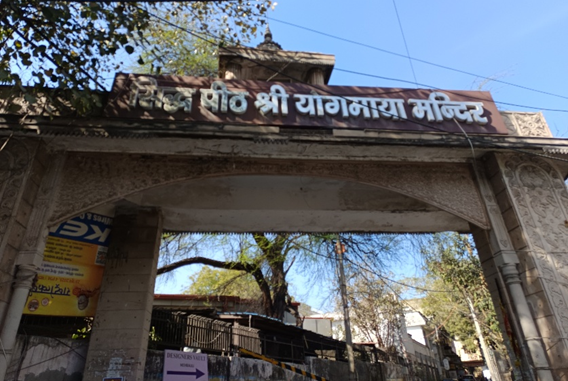
Figure 7: Entrance gate that reads Siddha Shri Yogmaya Mandir Image Courtesy: Poorvaa Malhotra Feb 13. 2026
The entrance, marked “Siddha Peetha Shri Yogmaya Mandir,” leads visitors toward the main sanctuary. In contrast to circular hypaethral (roofless) enclosures, the Yogmaya temple has a shikhara-style structure surrounded by residential buildings. Although the present structure is modest, the site is widely regarded as one of the few surviving pre-Islamic temples of Delhi.
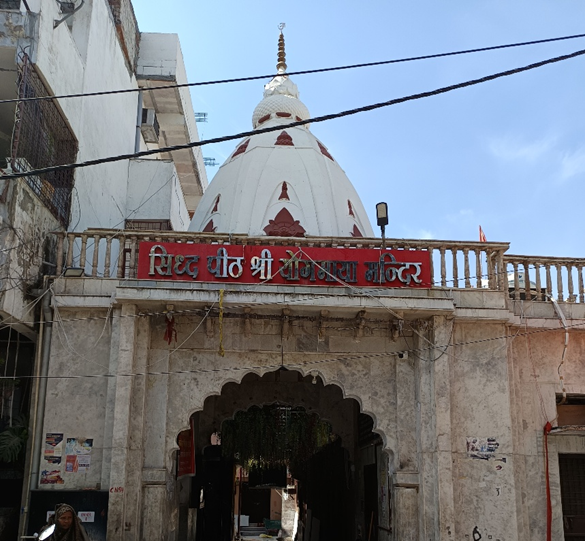
Figure 8: Domb Style Shikhara and Arched gateway Image Courtesy: Poorvaa Malhotra Feb 13,2026
The notable architectural feature is the dome-shaped shikhara painted in white and red. At the top, there is a finial (kalasha) and a symbol of “Om”. The entrance is shaped like an arched gateway with multifoil arches, common in late Medieval and colonial-era architecture. It may suggest that the temple underwent significant renovations during the Mughal era and reflects a blend of Indo-Islamic structural elements.
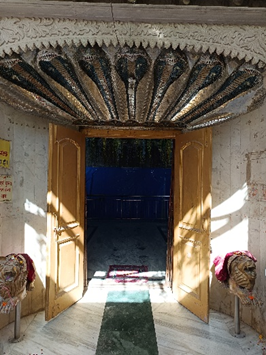
Figure 9: Main Entrance to the Temple Image Courtesy: Poorvaa Malhotra Feb 13,2026
Upon entering the temple complex, a shoe stand is to the left, followed by a pathway that guides worshippers toward the main shrine. On the right, the wall has carvings of the goddesses, accompanied by two dwarpaals guarding the gateway. The entrance itself is richly adorned with seven-hooded serpents (Shesha) embellished with small pieces of mirror tiles, and below two lion sculptures on either side to show strength and protection. While the temple is ancient and once made of red sandstone, it has now been updated with marble and contemporary tiling, giving it a modern look.
Before entering the garbhagriha (sanctum sanctorum), devotees encounter a beautiful Sanskrit salutation, “Yogmaye Maha Lakshmi Narayani Namostute,” often found in the Devi Mahatmyam to honour Goddess Narayani or Lakshmi.
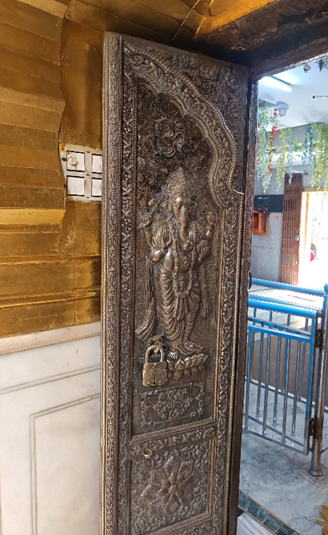
Figure 10: Gateway to Garbagriha Iamge Courtesy: Poorvaa Malhotra Feb 13,2026
The gates have a carving of four-armed Ganesha standing on a lotus (padma). He is wearing a crown, fine jewellery, and floral garlands with his four arms representing his mastery over the four Vedas and the cardinal directions. The lower right hand shows the Abhay Mudra blessing the devotees entering the garbhagriha, while his lower left holds a modak. In his upper hands, he holds an axe and in the other a noose. The Om is carved above his head and is decorated with floral designs.
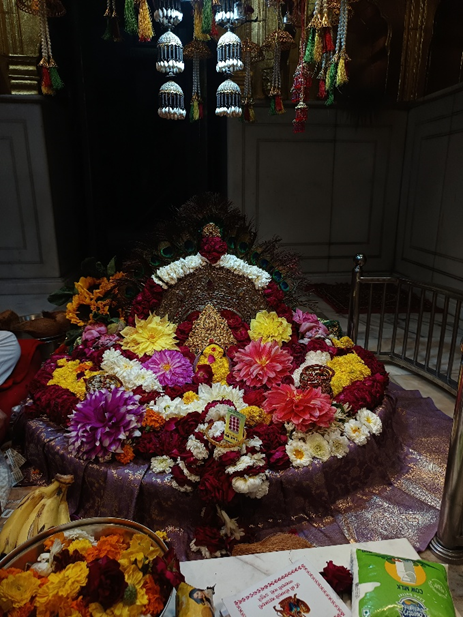
Figure 11: Goddess Yogmaya Image Courtesy: Poorvaa Malhotra Feb 13,2026
Stepping through the gate feels like entering a divine abode. At the core of the sanctum, there is the Goddess in her sacred pindi (natural stone) form, which is one and a half feet deep (Kumar, 2006). She is adorned with a circular crown, radiating a beautiful aura, and surrounded by fresh flowers, shringar (ornaments), and prasad. This sacred setting creates a deeply peaceful and holy atmosphere for every devotee. Yogmaya is revered as an incarnation of Adi Shakti Mahalakshmi. According to local legend, the Goddess is worshipped in two distinct parts across India: her head is enshrined in this Delhi temple, while her feet are worshipped as Vindhyavasini at Vindhyachal, near Varanasi. The pandit was generous while offering the prasad and kindly allowed to take a few photographs of Mother Yogmaya. He also said that the five-tiered Chattra (ceremonial umbrella) above the goddess is believed to be 50 years old.
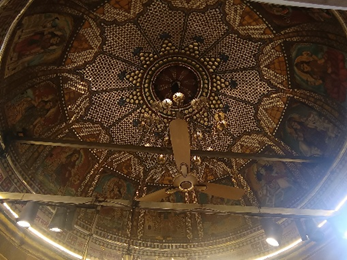
Figure 12: Ceiling Image Courtesy: Poorvaa Malhotra Feb 13, 2026
The dome ceiling of the garbhagriha is a centre of attraction, the Navadurga, including Lakshmi, Saraswati, Chamunda, Shailputri, Skandamata, Chandraghanta, Katyayani, among others, creating a truly heavenly atmosphere.
The daily rituals at the temple begin in the early morning during the Brahma Muhurta (pre-dawn), considered the most auspicious time for spiritual activity, when the bathing ritual (abhisheka) is performed. The head priest is assigned the duty to perform the ritual of bathing Mother with samagree like water, milk, curd, honey, sandalwood paste, red Sindhoor, and cow urine. After the water bath, curd is poured over the deity, followed by preparation of Panchamrita or Charnamrita, which is then distributed to devotees as a blessed offering.
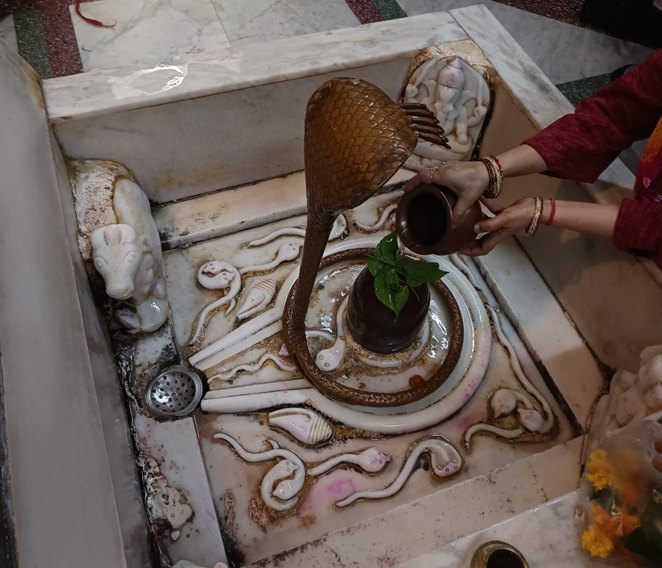
Figure 13: Shivling Image Courtesy: Poorvaa Malhotra Feb13,2026
After offering prayers to the deity, the devotees exit the garbhagriha and continue their spiritual journey by having the darshans of the sacred Shivling. The devotees perform their morning rituals and offerings. Apart from the main sanctum, the temple complex has several niches dedicated to deities, including Ganesha, Hanuman, Ram-Sita with Lakshmana, Radha-Krishna, and Vishnu-Lakshmi. Interestingly, there is also an image of Kalki, the final avatar of Vishnu. These shrines appear to be of a more modern architectural design.
Cultural Significance
Navratri, literally meaning nine nights, is observed twice a year as Vasantik Navratri, also known as Chaitra Navratri, in the month of Chaitra (March-April) and Sharada Navratri in the month of Aswin (October-November). Each nine-day period is dedicated to the worship of Mother in her nine different forms, where devotees fast and offer prayers to the devi. The Yogmaya temple is beautifully decorated with flowers, creating an atmosphere of devotion and festivity. Devotees gather in large numbers and perform Aarti and bhajans to seek blessings from Mother for a prosperous, healthy, and harmonious new year. This nine-day festival, dedicated to the Divine Mother, holds immense cultural and spiritual significance for the local community.
One of the oldest festivals is Phoolwalon ki Sair (Procession of Florists), also known as Sair-e-Gul-Faroshan, which is historically associated with the Yogmaya temple. This is a unique festival that highlights cultural syncretism as it is celebrated by both Hindus and Muslims communities with great enthusiasm and devotion. Described as the Pankha Mela in the Gazetteer of Delhi District (1883–84), a large procession of people is carried out at the Yogmaya temple and the nearby shrine of the Dargah of Qutbuddin Bakhtiar Kaki, teacher of the Sufi saint Baba Farid, who was the guru of Nizamuddin Auliya. The festival is held during the months of Chaitra and Asoj (Ashwin), specifically on the 8th and 9th days of the lunar calendar in each of these months. Flowers, garlands, pankhas (fans), chaadars (sacred cloths), and chhatars (canopies) are offered at both the temple and the dargah on consecutive days, symbolizing communal harmony and shared respect. Traditionally, the festival is linked to the Mughal patronage of Akbar Shah II and later Bahadur Shah Zafar. Currently, Anjuman Sair-e-Gulfaroshan, a socio-cultural society formed by the first Prime Minister of India, Pt. Jawaharlal Nehru in 1962, to promote and preserve the cultural traditions by organising the Phool Walon Ki Sair.
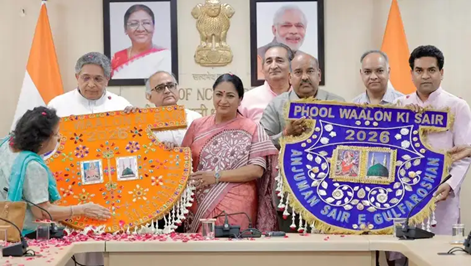
Figure 14: Representation of Traditional Floral Fan by Anjuman Sair E Gulfaroshan, March 2026 Source: www.indiatimes.com
Conclusion
The Yogmaya temple holds political and historical relevance with its connection to the Chauhan rulers and later Mughal rulers, including Bahadur Shah Zafar. Its links to Indian mythological traditions and spiritual philosophies underline its antiquity. At the same time, it remains a living site of worship reflecting the cultural landscape of Delhi and a witness to a shared legacy of syncretic festival traditions that developed during the Mughal period, such as Saie-e-Gulfaroshan. Architecturally, the temple is relatively modest, which highlights its continuity and the phases of reconstruction and adaptation over time.
In a nutshell, the Yogmaya Temple can be seen in the context of early Śākta and Yoginī traditions in the Delhi region that was once known as Yoginipura, prior to Islamic rule. The existence of Yogmaya as a sacred shrine of Shakti worship in Delhi shows the continuation of these traditions, adapted into mainstream devotional practices over time.
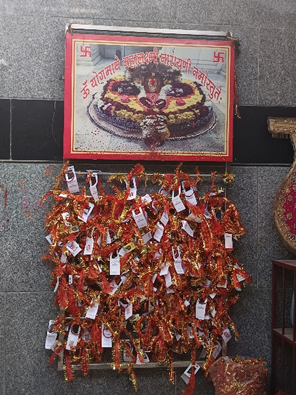
Figure 15 Yogmaya Temple Image Source: Poorvaa Malhotra Feb13,2026
Bibliography
Amazzone, L. (2016). Yoginis of Past and Present. Retrieved from Sutrajournal.com: http://www.sutrajournal.com/yoginis-of-past-and-present-by-laura-amazzone
Chawla, N. A. (n.d.). Yogini Goddesses in Delhi. Retrieved from Nooranandchawla: https://nooranandchawla.com/yogini-goddesses-in-delhi-artist-seema-kohli-a-circle-of-our-own-gallery-ragini/
Dehejia, V. (1986). Yogini Cult and Temples: A Tantric Tradition. New Delhi: National Museum .
Keshari, M. (2023). The Yogini of the Yoginipura: A Note About Two Unreported Early-Medieval Sculptures from Delhi. Quarterly Journal of The Mythic Society, 114.
Kumar, S. (2006). Delhi: City of Yoginis. Pilgrims Publishing.
Roy, A. (2015). Sixty-Four Yoginis: Cult, Icons and Goddesses. New Delhi: Primus Books.
Yogini Tempels. (n.d.). Retrieved from Wikipedia: https://en.wikipedia.org/wiki/Yogini_temples
Sources are powerful, information is fluent and totally factual. The images and recommendations are clearly mentioned, thank you @poorva malhotra for sharing these Epigraphy literature and their behind stories and sources.